
Helicopter of 100 Professions: Eight Facts about the Mi-8
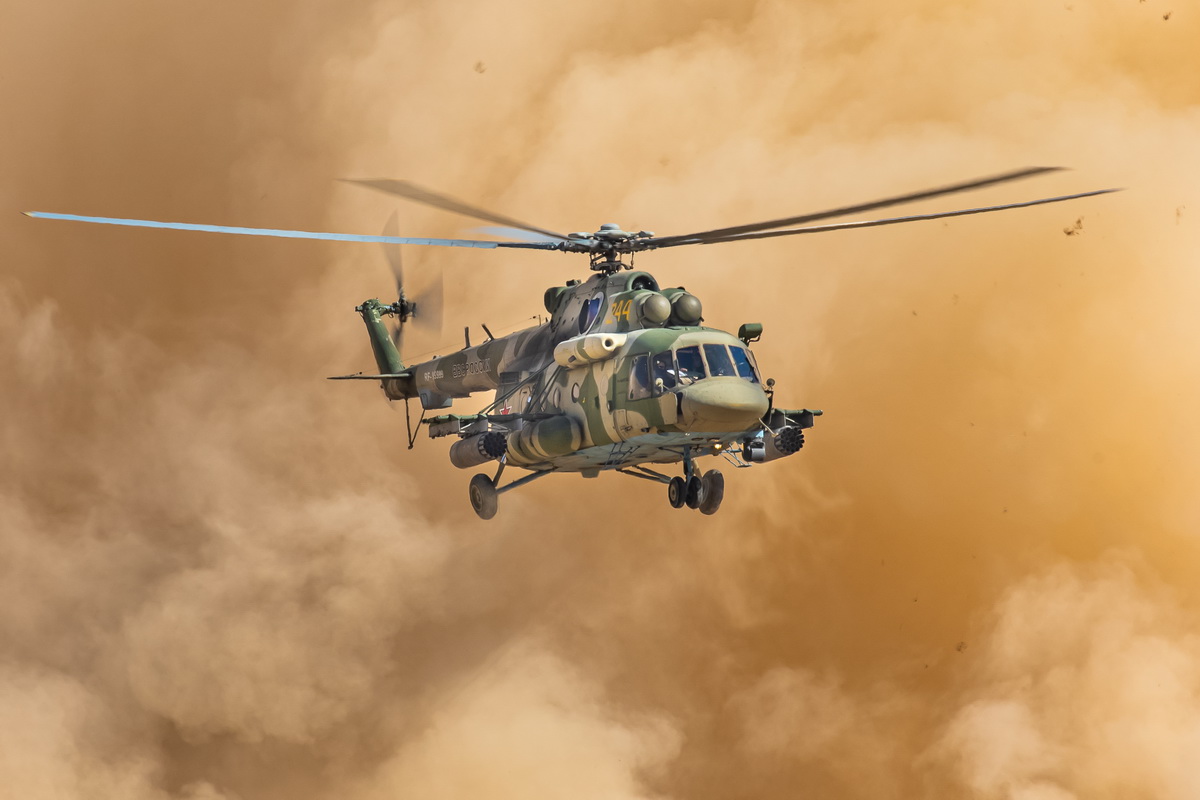
Read below about one of the most mainstream, popular and multi-purpose helicopters in history
Photo: Ministry of Defence of the Russian Federation
Production of the iconic ‘eight’ started in summer 1970 at the Ulan-Ude-based aircraft factory, Russian Helicopters holding, where about 4,500 helicopters were made over the years. Today the Mi-8 is a symbol of Russian helicopter manufacturing, engineering and operational reliability that is known far beyond our country.
We have collected interesting facts about the helicopter that is highly appreciated by the military, rescue and medical personnel, and even astronauts.
1/ The helicopter was born due designer’s ingenuity
In order to get funding for the development of a new helicopter, Mikhail Mil, a helicopter designer, presented a new project as modernization of the existing successful military transport helicopter, the Mi-4. The trick worked and the helicopter, that finally turned into a fully new Mi-8, got the green light from the government.
2/ An American helicopter gave an incentive to modernization
In 1959, Nikita Khrushchev visited the USA where he was impressed by the Sikorsky S-58, a governmental helicopter, that was often used by the President of the United States and the Soviet leader for traveling. Afterwards, the country’s leadership gave the green light to creating a single-engined version, the V-8, and later a twin-engined version. Thus, the V-8A appeared — a more powerful, reliable and roomy helicopter that is comparable with American helicopters in terms of its performance.
 Taxing V-8. Internet Museum of Russian Aviation «Авиару.рф»
3/ The USSR’s first special-purpose helicopter gas turbine engine
For a new helicopter version, the TV-2-117, the USSR’s first special-purpose helicopter turboshaft engine, was created. It was designed by OKB-117, a young design bureau (now UEC-Klimov included in Rostec’s United Engine Corporation). Modified airplane engines had been used in the helicopter manufacturing before.
4/ An almost round-the-world flight — for advertising purposes
To show the new Mi-8 globally, a large-scale demonstration program was arranged in the 1960s. Test pilot German Alferov flew a total of 35,000 km on the Mi-8, thus, making almost a round-the-world trip. This played an important role in promoting the helicopter on the global market.

Photo: Rostec State Corporation
5/ More factories for the ‘eight’
The Mi-8 was highly appreciated by foreign experts and quickly gained popularity domestically and internationally. While initially only Kazan Helicopter Plant produced the helicopters, then it was necessary to involve one more manufacturer with growing demand. Thus, 55 years ago, in summer 1970, the Ulan-Ude-based aircraft factory joined the program and produced about 4,500 ‘eights’ since that time. Both manufacturers are now included in Rostec’s Russian Helicopters holding.
6/ One man army: Tens of modifications
A great number of modifications and configurations have been created on the basis of the Mi-8 and can hardly be counted: medical, transport, attack, reconnaissance, rescue, flying workshop, electronic warfare, amphibious helicopters and even helicopters used to transport astronauts. Due to their flexibility, successfully chosen dimensions and capacity, the Mi-8 has actually become a rotorcraft for all occasions, a helicopter of 100 professions.

Photo: National Air Ambulance Service
7/ Rotary-wing ambulance
The medical Mi-8’s currently help Rostec’s National Air Ambulance Service in life saving operations. Pilots of the ‘eights’ with medical personnel on board fly everyday on call to the most complicated cases, where emergency assistance is necessary, but road ambulance is not keeping up. This is particularly important for hard-to-reach regions of Russia. NAAS air fleet has 76 helicopters — 38 Ansats and 38 Mi-8. The Mi-8MTV-1 furnished with fuel tanks, search and evacuation systems and a wide range of medical equipment are currently entering service.
8/ One of the most mainstream helicopters in history
More than 13,000 helicopters from the Mi-8 family (including the Mi-17 and export versions) have been produced in total. This makes it one of the world’s most mainstream helicopters and an absolute record-holder among the similar-class rotorcraft. Modernized Mi-8/17 versions are still popular: they hold more than 90% of the global market in number. Owing to new materials, engines and avionics, the ‘eight’ maintains leadership and faces the future with confidence.