
A Salvo from MANPADS: the Dzhigit and Gibka-S Systems. Part I
How the air defence system got started and what air defence weapons currently defend against air attacks
Photo: Rostec State Corporation
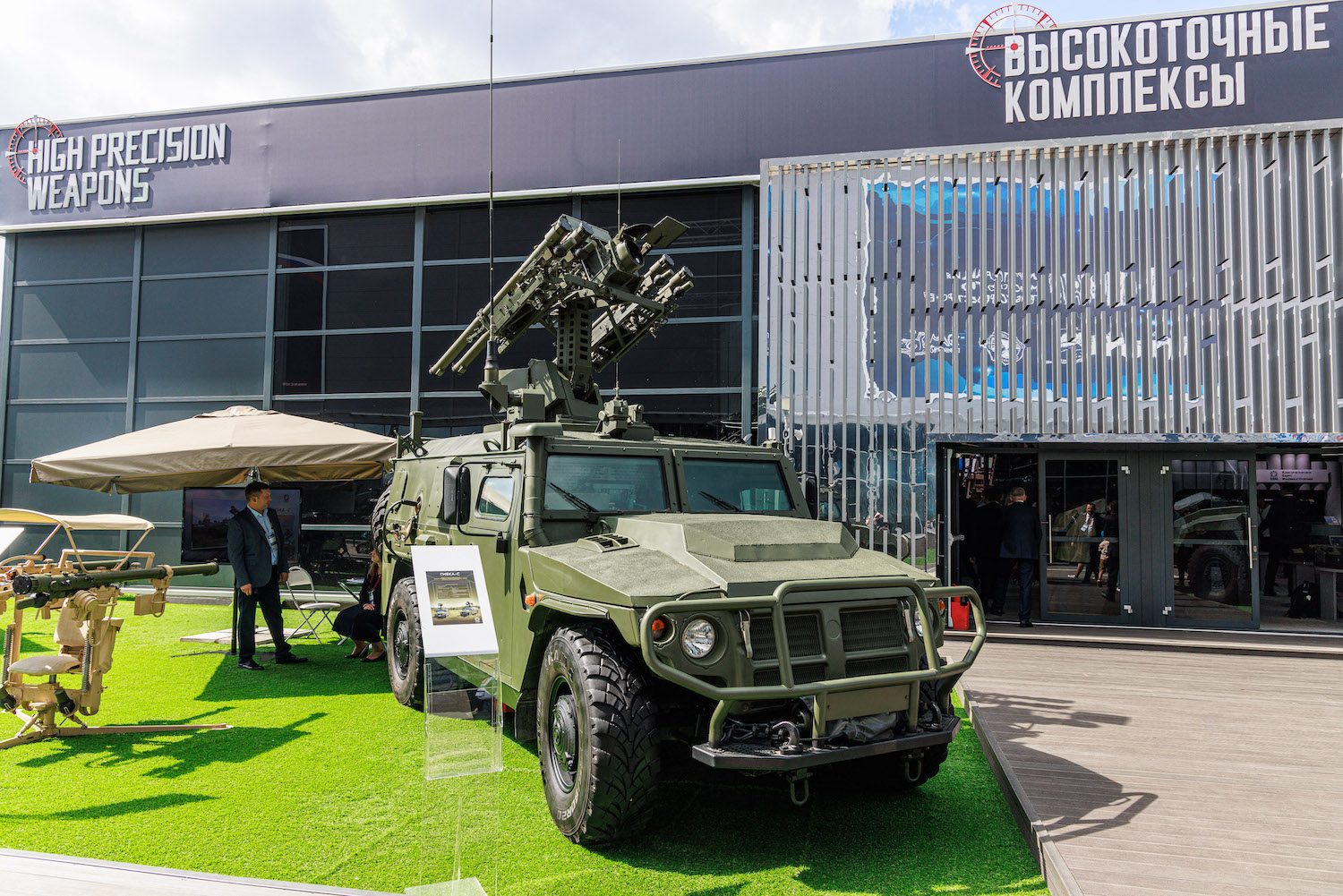
It goes without saying now that air defence is a critical and necessary part of activity of our Armed Forces. Designers and engineers from High-Precision Systems included in Rostec State Corporation have created the Dzhigit and Gibka-S, new surface-to-air missile systems for mobile air defence, on the basis of already deployed surface-to-air missiles and launchers to protect army and combined arms units in any combat conditions and in any situation. They can effectively fight against any aerial threats, from attack drones and UAV to cruise missiles. Learn more about these systems below.
Russia’s first MANPADS
The Strela-2 deployed in the Soviet Army in 1968 was the first MANPADS in the USSR. Its was an outstanding and formidable weapon for its time. The Strela-2 reliably hit any air targets at a distance up to 3.5km and an altitude from 50m to 1,500m. The Strela-2 MANPADS used a homing missile flying to the target at a mean velocity of 430m/s.
The Igla MANPADS, created in 1984, was the next stage in the work of Soviet engineers. A heavy warhead missile was the key component of the system. The effective area also increased, the Igla killed all targets at altitudes from 10m to 3.5km at a distance up to 5,200m.
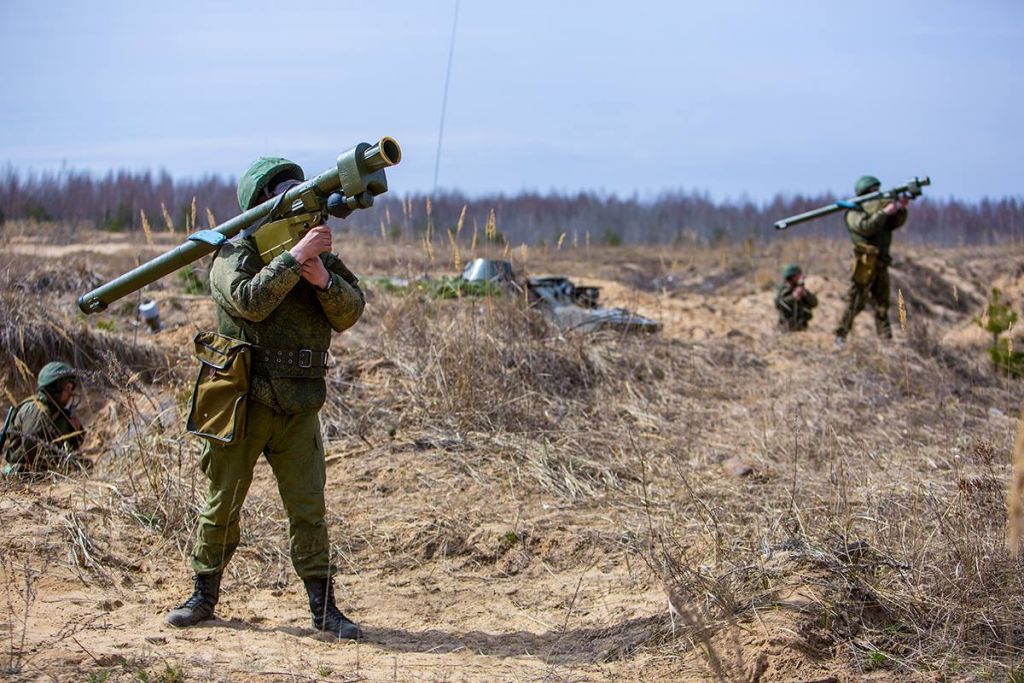
Photo: Ministry of Defense of the Russian Federation
The Igla-S MANPADS was delivered to the Russian Army in the early 2000. This system is used to fight against small-size air targets and low radio/IR signature targets such as cruise missiles and drones. The Igla-S is equipped with an impact/proximity fuze and has an increased firing range.
A top-of-the-line representative of this class of weapons, the Verba MANPADS, is currently in the arsenal of the Russian Armed Forces. This system has been fielded since 2014. The Verba is suitable for any geographic zones, in the temperature range from −50 °С to +50 °С. According to expert estimates, the Russian Verba MANPADS surpasses all currently existing man-portable air-to-surface systems in the world.
The system uses a supersensitive homing missile with high interference immunity. The key capabilities of the Verba are as follows: attack range − up to 6000m, height of targets — from 10m to 3500m, velocity of targets — up to 400m/s, pre-operation time is just 12 s.
A brave ‘Dzhigit’
It might seem that the Igla MANPADS and especially the Verba are so perfect and self-sufficient that an attempt to improve them somehow is doomed from the start. It turned to be far from being the case. High-Precision Systems included in Rostec State Corporation has created the Dzhigitt launching unit. This is a light-weight, compact, reliable and adaptable unit with a sufficiently simple configuration that is designed for deployment, guidance and launching of two types of surface-to-air guided missiles, the Igla or Verba. In simple terms, the Dzhigit is a light platform for deployment of a pair of Igla or Verba type launch tubes equipped with an operator’s seat and a set of special accessories.

Photo: Rostec State Corporation
The launching unit is easily disassembled and assembled and can be used as a fixed or mobile version, for which it can be easily mounted on a standard vehicle. The Dzhigit is operated by one anti-aircraft gunner.
Advantages of this launching unit include: high rate of fire, higher target kill probability (one and a half as high as that of a traditional single-tube MANPADS), compatibility with a night sight and friend-or-foe flying object identification. The Dzhigit launching unit is a fire-and-forget system that supports a manual or automatic firing mode.
The Dzhigit considerably reduces physical load on the gunner because now there is no need to carry the MANPADS on the shoulder. A protective tent is provided for operator’s comfort and weather protection. Reloading time of the whole system is two minutes. Thus, the Dzhigit launching unit is a high-mobility and high-performance army and local air defense system.
To be continued...