
Where Microrockets Will Fly
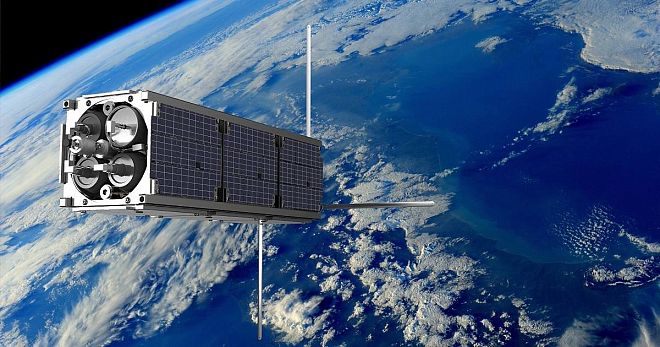
About the new class of launch vehicles and engines for them, which Rostec is developing
Photo: Roscosmos
The trend of recent years in the the space industry is the transfer from heavy satellites to micro/nanospacecraft. Large launch vehicles are not needed any longer to deliver them to orbit, so-called microrockets, or ultra-light launch vehicles, are sufficient and are capable of carrying payloads up to 500 kg into orbit.
This new class of spacecraft is an important area for international space industry development with dozens of countries competing for the opportunity to fill the open niche first. Russia moves along the global way by developing its ultra-light launch vehicles. Engines are the key component of any rocket, and the design bureau of Rostec’s UEC-Kuznetsov in Samara is focused on creating such engines.
Faster, higher, lighter
For as long as satellites and other spacecraft weighed hundreds of kilograms, there was no need for making launch vehicles smaller. But with the evolution of microelectronics and other industries, satellites have been becoming smaller and lighter. For example, a new CubeSat standard — a device with dimensions of just 10cm×10cm×10cm — was invented as early as in the 1990s in the USA. And it is unreasonably expensive to use the Soyuz or Angara type launch vehicles to put such “little ones” into orbit.
Heavy vehicles will certainly remain to be used for placing heavy payloads and crews into orbit, but large and powerful spacecraft are no longer needed to deliver satellites – ultra-light launch vehicles capable of carrying payloads up to 500 kg will cope with this job easily. Microrockets are used to streamline the process offering low-cost and flexible solutions for carrying up small spacecraft to orbit.
These changes are particularly important in the time of growing interest in launching private satellites and small spacecraft for research and commercial purposes. About 8,000 satellites are already in Earth’s orbit now with their number increasing from year to year. Earth sensing, navigation, IoT, research satellites, etc. — all of them may be launched effectively using ultra-light launch vehicles.
Microrockets from around the world
The world’s experience shows that microrockets are increasingly demanded on the space service market. Such countries as USA, China and New Zealand are actively developing and using ultra-light launch vehicles for small satellites. The American-New Zealand Electron launch vehicle made by Rocket Lab capable of delivering payloads up to 300 kg to orbit is among the successful projects.
Russia also makes serious efforts in this area by developing its own microrocket projects. As a matter of fact, the light rocket class has long been employed. The Soyuz-2.1b launch vehicle was used as the basis for a lightweight version with the NK-33A engine developed by UEC-Kuznetsov. The Soyuz-2.1v upmass is 1,500 kg. Twelve starts of the launch vehicles were made and 23 spacecraft were carried up to orbit from the 28th of December 2013 to the 9th of February 2024.
Private space exploration sector is also growing. For example, SR Space company is focused on the development of an ultra-light launch vehicle family: geophysical Nebo, ultra-light Cosmos (390 kg) and small-lift Stalker (700 kg).
Technological challenges
Creation of an engine for an ultra-light launch vehicle is a complex and challenging task. The main difficulties are in achieving high energy efficiency with the minimum weight and dimensions. Traditional rocket engines used for heavy launch vehicles are not suitable for microrockets due to their high weight and considerable fuel consumption. New engines should be much lighter, more compact and just as reliable and safe at the same time.
Samara-based UEC-Kuznetsov included in Rostec’s United Engine Corporation is the main developer of Russian engines for ultra-light launch vehicles. The company will create liquid-fuel rocket engine versions for the first and second stages of ultra-light launch vehicles designed to carry up commercial satellites up to 250 kg to Earth’s orbit at the altitude of 500 km.
As a matter of fact, many companies included now in Rostec State Corporation are closely related to the space topics. They manufacture components for rockets, satellites and spacecraft, develop new space technologies and materials.
For example, UEC-Kuznetsov has been producing launch vehicle engines since the late 1950s. It was this company that made the engines to carry up the first human to space. UEC’s propulsions provide dozens of starts of launch vehicles with crews and various payloads annually. So, huge experience, large design and engineering infrastructure, and state-of-the-art technology lie behind the Samara-based team of professionals. Work on a new engine that will carry Russia’s first microrockets to space has already started.