
Rooks Have Returned: Half a Century has Passed Since the First Flight of the Su-25
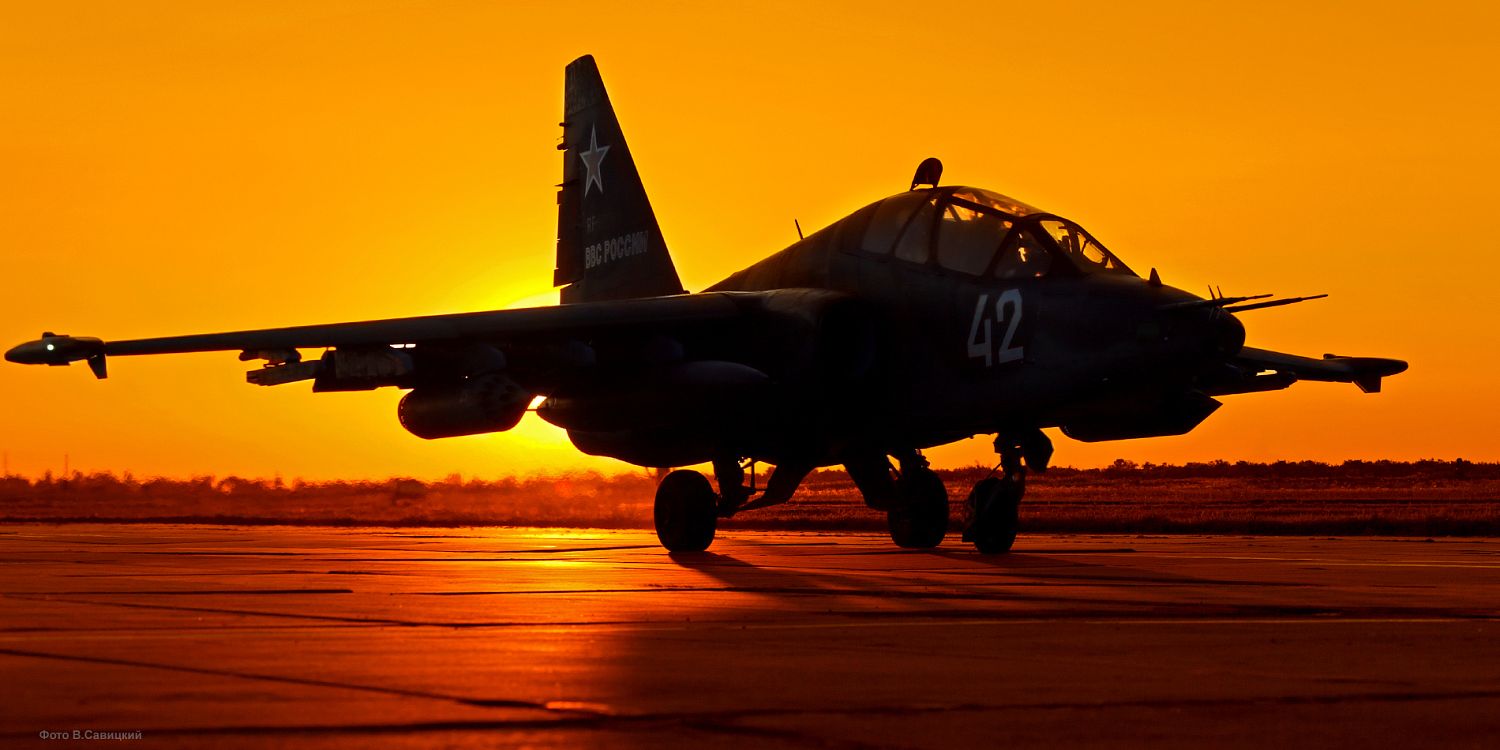
Read below about creation of the iconic attack aircraft known as the Grach (rook)
Photo: Ministry of Defence of the Russian Federation
Fifteen years ago, on a frosty winter day 22 February 1975, Vladimir Ilyushin, a chief pilot of Sukhoi Design Bureau, flew a new aircraft that marked a return of the attack aircraft to the Air Force of the USSR. Moreover, the emergence of this aircraft made the attack aviation come back. The aircraft then known under the code T-8 was destined to become one of the most famous and perhaps the most actively used aircraft in the late 20th — early 21st century. The aircraft successfully passed the test and was placed into commercial production under the code Su-25. In the field, the new attack aircraft came to be known as the Grach (rook).
Successor of the famous Il-2
The Su-25 is one of the few attack aircraft in the aviation history, i.e. aircraft designed for close air support. Attack aviation as a branch of Air Force of the USSR was phased out in the 1950s. Then it was considered that the attack aircraft missions could be effectively completed by high-speed strike fighter jets armed, among other things, with tactical nuclear weapons. But as time passed, the experience of large-scale military exercises and a number of local armed conflicts showed that a small high-maneuverable protected aircraft was necessary not only for bombing, but also for carrying out missile airstrikes and cannon fire against pinpoint targets.

Photo: Internet museum of Russian aviation «Авиару.рф»
Designers from Sukhoi Design Bureau proactively undertook the development of a new attack aircraft project. Therefore, when a tender for a new combat attack aircraft was announced in 1969, it was Sukhoi Design Bureau’s project that won the contract. Designers submitted not only a pilot project, but also their best practices together with a ready-made full-scale mockup of the future aircraft.
Su-25 combat survivability system
Provision of a high hardness level was one of the priorities in creating a new attack aircraft. A full combat survivability system was developed for the Su-25. It included “unexplosive” fuel tanks with porous filler that were filled with inert gas. The aircraft was equipped with an automatic fire-fighting system, additional armor was implemented for the engine compartments. Pilot protection was ensured by an armored cockpit capsule welded from titanium armor. Wiring of the Su-25 control system was made using large-size tubes that increased the system reliability by several times.

Photo: Peter Bakema / wikimedia.org
Besides the outstanding protection, simplicity and performance, the Su-25 has the necessary maneuverability and is capable of flying with full payload from frontline noninstrument unpaved airfields. Full aircraft ordnance is 4400 kg, it is placed on ten underwing pylons and includes unguided and guided air-to-air missiles of various calibers and purpose, high-explosive, concrete-piercing, fuel-air explosive and other special air bombs, air-to-air self-defence missiles, built-in GSH-30-2 30mm twin-barrel gun with ammunition consisting of 250 rounds.
How the Su-25 came to be known as the Grach
It can be said that the Su-25 got into action as soon as it came into existence. A decision was made on conducting the Rhomb operation at the beginning of March 1980. Such codename was assigned to the battle service tests of a new attack aircraft that were carried out in the Republic of Afghanistan.

Photo: Rob Schleiffert / wikimedia.org
The first Su-25 also appeared as part of the limited contingent of Soviet Forces. They were used in Afghanistan as part of Separate Attack Air Squadron 200. Major and then lieutenant colonel Grigory A. Chekhov was the commander of operational squadron 200 since 1984. He signed all combat documents as GrACh according to his initials. It was his “brand” signature. Soon with somebody’s helping hand the whole Su-25 squadron was called Graches after the name of its commander. Thus, the new attack aircraft got its second name that, as the saying goes, made the bull's-eye. A cartoon-like young rook drawn on the fuselages of the first Su-25s was just an echo that stuck the Grach nickname to the winged combat vehicle even tighter.