
High Energy
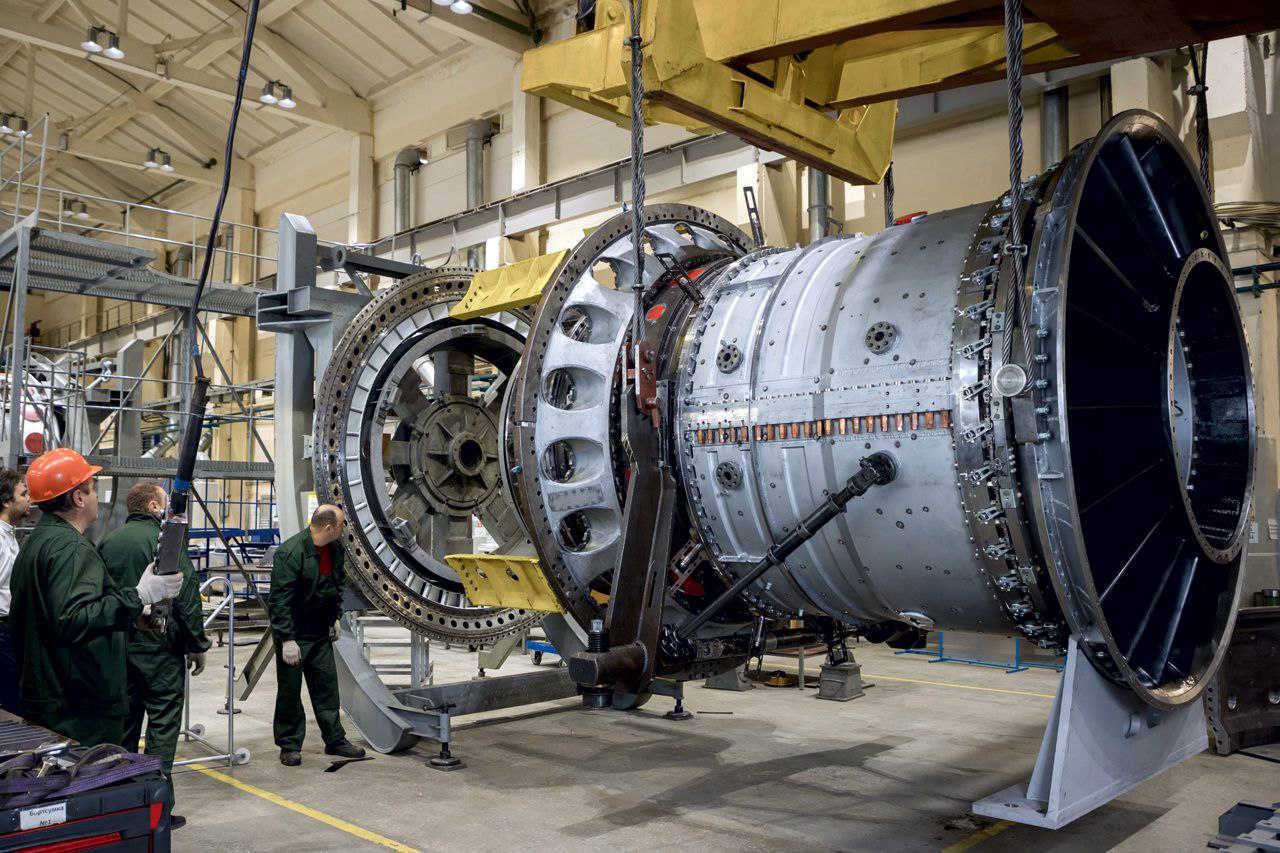
How gas-turbine power plants appeared and work
Photo: United Engine Corporation
Gas turbines are the heart of modern power industry. They are used as part of gas-turbine and combined cycle plants for electricity and heat generation in regions and remote areas where centralized electricity supply and heating are not available, or as backup and peak power sources.
Read below about how gas turbines appeared and work as well as about advanced solutions of Rostec’s United Engine Corporation.
How a gas turbine is arranged and works
Turbine is a multipurpose rotary thermal machine that converts the energy of flowing fluid, with compressed air, water, gas or steam used as such, into mechanical rotational energy. Turbine looks like a rotating component with blades that converts fluid energy into net mechanical and/or electrical energy.
A powerful impetus for turbine development was provided by creation of a turbojet in the 1940s, one of the key components of which is a gas turbine.
Let's take a closer look at the turbojet operating cycle. Imagine a large diameter pipe. It has an internally-mounted free-rotating shaft. Two main components are fixed on the shaft like on an axle: a compressor at the front and a turbine at the rear. A combustion chamber is between them.
First a regular starter starts rotating the shaft, on which the compressor and turbine are fixed. While rotating, the compressor starts air intake and compression, and then the air flows to the combustion chamber. Fuel is injected into the combustion chamber at the same time and is mixed with the compressed air and ignited. A so-called jet stream is formed, strikes the turbine on its way and makes the turbine rotate faster. Now the engine is started, the starter is turned off and the turbine rotates the compressor by itself.
The key difference of gas-turbine power plants from turbojets is in where the generated energy is directed. Gas turbine converts the fuel combustion energy into shaft rotation for electricity generation, while the turbojet directs high-speed gases to create jet thrust that drives the aircraft.
The key advantages of gas turbines include high power-to-weight ratio; fuel flexibility allowing to use different fuels; quick start and shutdown; environmental friendliness (lower emission compared with coal-fired power industry); reliability and durability.
Foundation for national energy security
Domestically built gas turbines now play a key role in the power industry of Russia. Gas-turbine power plants supply electricity and heat to settlements in the south of Russia and Far North, support operations at rotation camps and oil and gas field infrastructure. United Engine Corporation produces a wide range of power plants based on gas turbines with a capacity from 2.5MW to 25MW. These machines are capable of running not only on natural gas and diesel fuel, but also on associated petroleum gas, which is released during oil production.
For example, UEC-Engineering included in UEC produces 22.5MW power units based on modern PS-90 series gas turbines. Modular design and performance of these power plants allows them to be put into operation in the shortest possible time. At the same time, UEC-Engineering is creating the next generation of mobile and prefabricated 25MW power plants. Such systems will be suitable for prompt transportation and deployment anywhere in the country. New 8MW power plants are also underway. They are designed for power supply of coastal areas and offshore facilities.
The lack of medium-sized and heavy-duty gas turbine manufacturing processes has been one of the key problems of Russian power industry until recently.
Development of Russia’s heavy-duty gas turbine started in 2013. The new machine was named the GTD-110M. Debugging process was fully completed in 2019 and the turbine was integrated into combined cycle units (CCU). Turbine capacity in normal electricity generation mode is 115MW, but when it is used as part of CCU, capacity of the latter will be as high as 175MW. Efficiency of Russia’s first heavy-duty turbine is 36.1%, blade speed is 3,000 rpm. The power plant is similar to foreign products in performance. Moreover, it is cheaper and more compact (weight of the GTD-110M is 60 tons). The new turbine uses only materials made in Russia.
The new domestic gas-turbine power plant has a great future. It is the GTD-110M that will be used as the basis for modernization of heat generating capacities in Russia. A quarter of all power plants in Russia are to be replaced with domestically built ones by 2031.
The first turbine of this type has been already used as part of Udarnaya TPP in the Krasnodar Krai. Udarnaya TPP, built by Technopromexport, Rostec’s subsidiary, generated almost 3.5 mln MWh of electricity during the first year of operation. The second commercially produced GTD-110M was supplied in autumn 2025 to one of largest power plants in the Rostov region for integration in the generation equipment.