
From Omnibus to Electric Bus: History of Public Transport
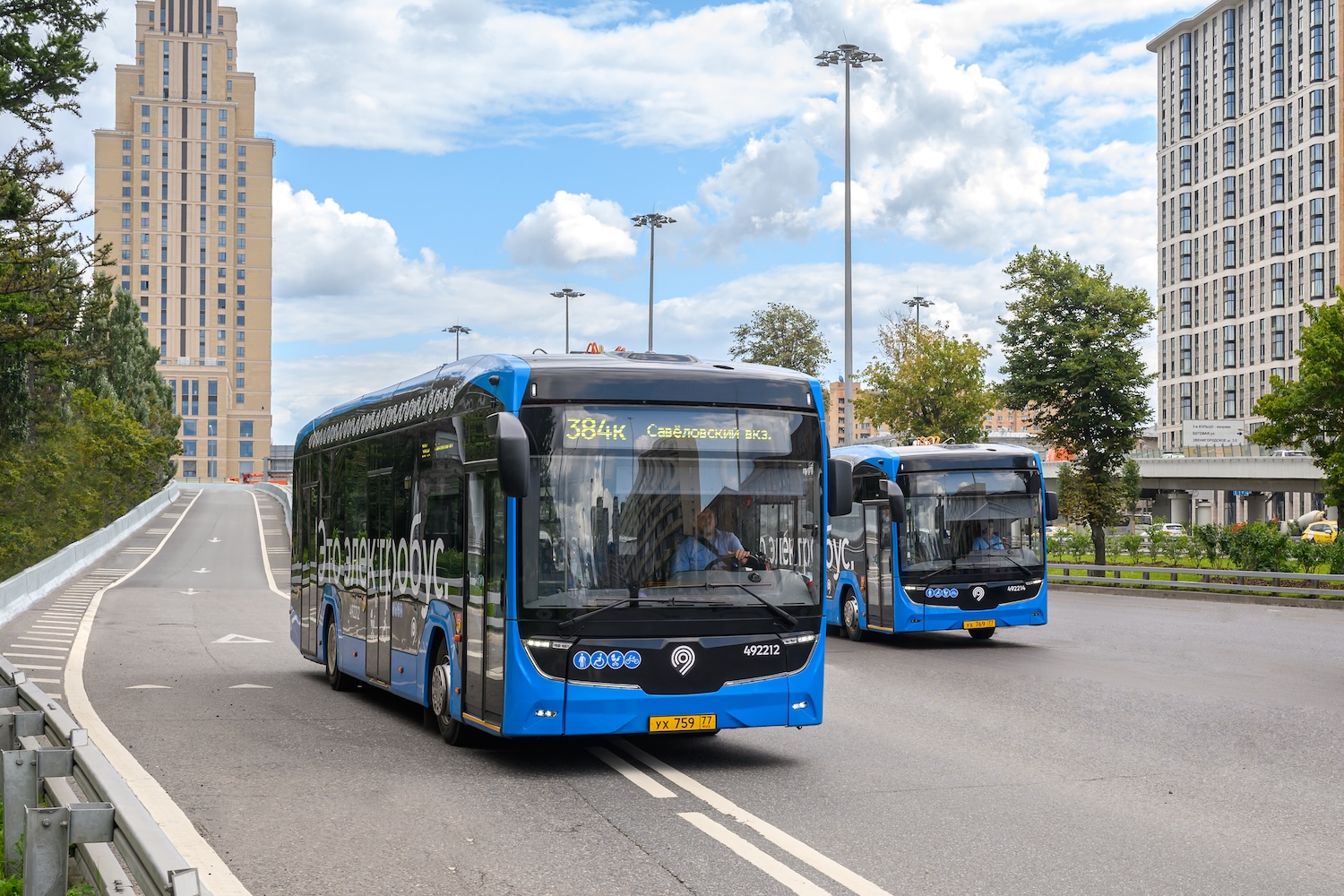
What urban transport was used by passengers a hundred years ago and what vehicles are used nowadays
Photo: Department of Transport and Development of Road Transport Infrastructure of Moscow
As lately as a little over a century ago horses clattered along and horsecars squeaked on the streets of large cities, and the first power-operated omnibuses were taken as technological wonders. Emergence of buses changed the pace of urban life. Vehicles created “for all” quickly occupied a key position in urban mobility and is still the most popular and important today.
How horsecars gave way to buses, when Russia’s first routes emerged and what role KAMAZ’s solutions play today — explore a brief history of urban public transport.
Bus = car + omnibus
Prototypes of modern buses and electric buses emerged on the cusp of the 19th and 20th centuries. Vehicles powered by an internal combustion engine (ICE) and electricity were being developed at the same time. The Russian word “autobus” was derived from “automobile” (road motor car) and “omnibus” (Latin omnibus meaning “for all”).
The first engine-driven bus was developed by Karl Benz, German engineer who invented a vehicle powered by internal combustion engine and founded the prominent automobile company. The bus was designed to carry eight passengers, moved at a speed up to 13 km/hour and served as intercity transport.
Russia’s first bus was designed by engineer Hippolyte Romanov. In 1899 he demonstrated an electric omnibus project, which picked up a speed up to 11 km/hour (average horsecar speed was 8 km/hour). The project was not implemented because of tough financial conditions, and the first routes emerged only in 1907 in Arkhangelsk, Saint Petersburg and Moscow.
Transport for all
The demand for public transport in the USSR grew by an order of magnitude. The first regular route was launched in Moscow in 1924, passengers were carried by British Leyland buses.
Moscow’s route network was growing: there were 39 routes by the late 1940s. Passenger traffic was growing at the same time. Only in Moscow it exceeded 123 million passengers per year.
In the 1970s, after extending its boundaries, Moscow had already 226 urban and 30 suburban routes. By the late 1980s, about 3.3 million people used Moscow buses.
Modern-day Moscow has Russia’s youngest fleet: more than 30% of city buses are under six years old. Electric buses are heavily used: there are more than two thousand of them, and this is the highest figure among European big cities. According to the Moscow Department of Transport, there are about 850 bus and electric bus routes in Moscow and their total length is more than 20,000 km.
KAMAZ and NEFAZ: new icons of bus manufacturing
Modern buses and electric buses are made by NEFAZ, Neftekamsk Automobile Plant, included in KAMAZ Group. It was established in the 1970s as a satellite plant providing KAMAZ with spare parts. Today it is a key manufacturer of buses mounted on KAMAZ chassis.
The first passenger bus, NEFAZ-5299, mounted on the KAMAZ-5297 chassis rolled off the production line in 2000. The model became a baseline for many future design solutions, it underwent more than 70 modifications during 25 years. This is a whole family of high-capacity buses designed to carry up to 115 passengers.
The KAMAZ-6299 bus, mass production of which started in 2021, is widely used. It is an extra high-capacity bus capable of carrying up to 162 passengers. KAMAZ also produces medium-sized buses designed to carry 65 people.
Electric buses are becoming increasingly popular. Moscow was the first city to pivot to public transport without internal combustion engines. The most common electric bus model in Moscow is the classical KAMAZ-6282. Mass production of the model started in 2018. Besides Moscow, this model is used in Rostov-on-Don, Perm, Volgograd, Kursk and other Russian cities. The KAMAZ-6282 ONC featuring night charging capability and high-capacity traction batteries has been developed for Saint Petersburg.
Plans and prospects
The national program involves renewal of more than 57,000 buses till 2030. According to the President of the Russia, the government shall provide annual reduction of the average age of public transport fleet in all regions of Russia.
According to Sergey Kogogin, General Director of KAMAZ, the company’s strategic plan includes ramping up public vehicle production capacities and achieving production of 3,000 vehicles annually. The company also considers an idea of building an electric bus service plant. KAMAZ is planning to continue its cooperation in supply of these vehicles with Moscow and other regions of Russia.