
Mi-171А3 Offshore Helicopter: Far from Shore
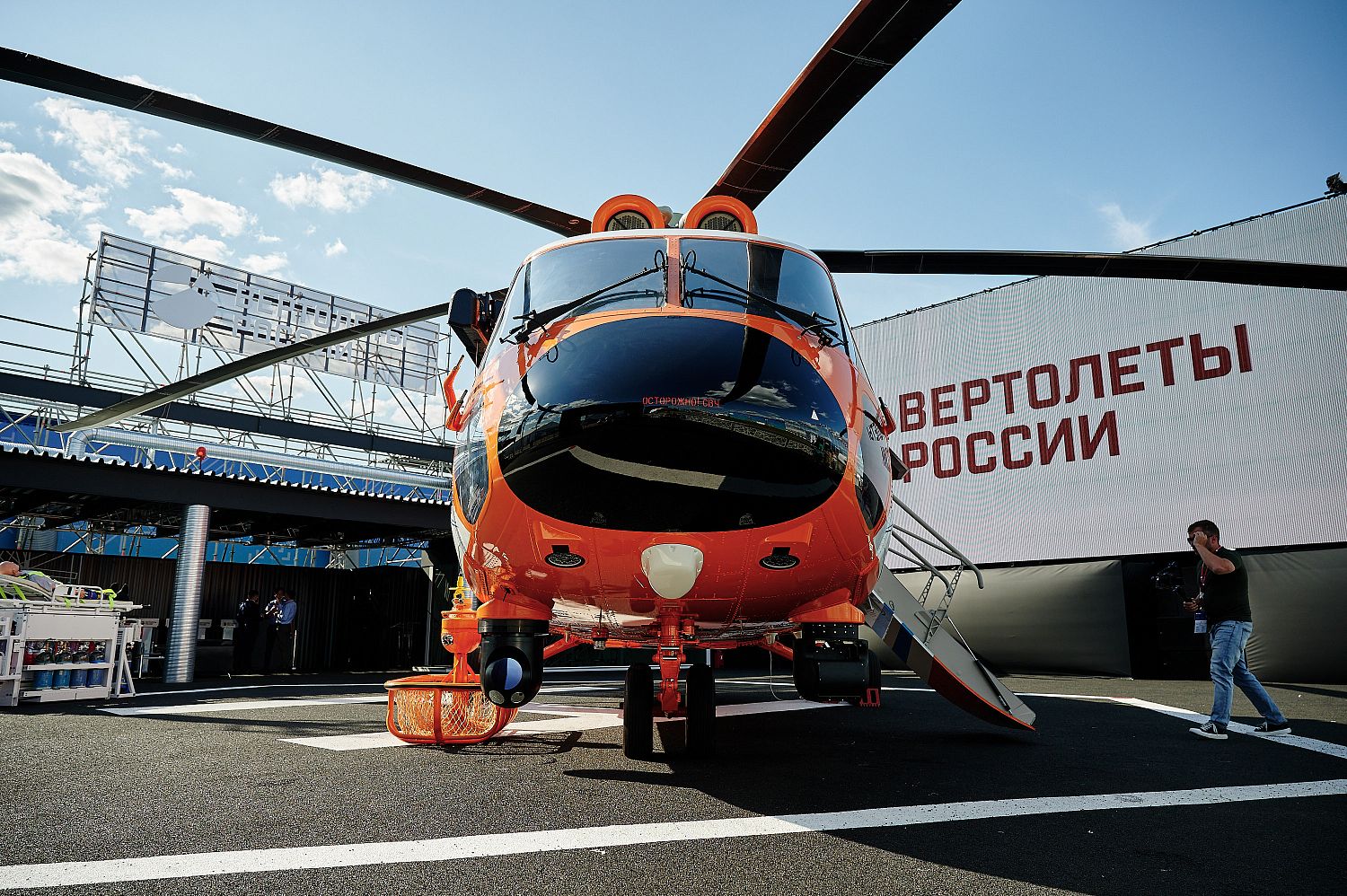
How a helicopter designed to connect offshore production platforms with land was created and what it can do
Photo: Russian Helicopters
The first commercial Mi-171А3 have been already delivered to the customer on Sakhalin where they will be used for offshore oil and gas field services. Three helicopters made at the Ulan-Ude-based aircraft factory included in Russian Helicopters holding are opening a new page in the history of Russia’s helicopter manufacturing — this is the first time a Russia’s special-purpose offshore helicopter has entered into real operation.
This event has been preceded by a big effort made to create and test the helicopter. At the beginning of the year, the Mi-171F3 successfully completed the state certification in a fully import-substituted design, proving compliance to the most stringent current requirements for flying over vast water areas.
Conquering continental shelves
Oil and gas companies carry out extensive exploration and development of new fields all over the world, getting farther from regions with well-developed infrastructure. Offshore fields located hundreds of kilometers away from shores constitute a special case. Whilst gas and oil production is carried out on offshore platforms in severe conditions.
To provide such facilities with everything they need, special vehicles are required that have high reliability, resistance to heavy landing, increased range, and special set of airborne flight instruments to allow flying over featureless terrain for a long time in adverse weather conditions, by day and night. Add to this a compulsory emergency and rescue operation capability and appropriate airborne equipment.
Domestically-built offshore Mi
Development of a local helicopter for offshore operations started at Mil Design Bureau in 2018. The new helicopter was a further development of the Mi-171А2. Unlike all previous versions, the offshore Mi has a new crash-resistant body with modified airframe lines. The Mi-171А3 design widely uses composite materials. Fuel tanks have an increased capacity and are placed in the cabin cargo floor instead of external side tanks. A heavy-duty landing gear and automatic emergency flotation system with automatically activated ballonets have been added. Moreover, the helicopter has a crash-resistant fuel system that avoids fuel spill and fire in case of emergency landing.
The helicopter is fitted with a domestically-built integrated flight and navigation system with a “glass cockpit”. The system is equipped with a digital autopilot and ensures helicopter operation by day and night in adverse weather conditions over a featureless terrain. Autopilot is designed for flying in automatic mode on airways and in uncontrolled airspace.
The helicopter is provided with the VK-2500PS-03 engines designed by United Engine Corporation. The helicopter’s power unit is equipped with the BARK-6V-7S automatic control system which is used to increase the contingency power, support operating modes in a wider temperature range and increase fuel efficiency indicators. Engine power is 2000 hp in rated power mode and 2700 hp in contingency power mode.
The helicopter can be quickly transformed into a search and rescue version, if required, by installing a winch, medical modules, searchlight and other equipment. Maritime search for people in distress is provided by a radar and electro-optical system designed for operation at night and in poor visibility conditions.
Testing, manufacturing and prospects
The first Mi-171А3 prototype was built at the Ulan-Ude-based aircraft factory in summer 2021. Thus, just three years have passed from the start of engineering phase to building the helicopter prototype. The flight test program was started in summer 2022.
The today’s Mi-171А3 is a flagship of the Mi-8/17 family that embodies all best practices of rotorcraft design. This is a multipurpose platform that can be used not only by oil and gas companies, but also by airlines focused on cargo, business and VIP carriage. In 2024, the Mi-171А3 was presented in the AURUS version designed specially for business needs. This helicopter version can carry up to ten passengers, and its cabin includes everything necessary to ensure a comfortable long-range flight.