
Farewell to Garbage: What does Waste-to-Energy Mean
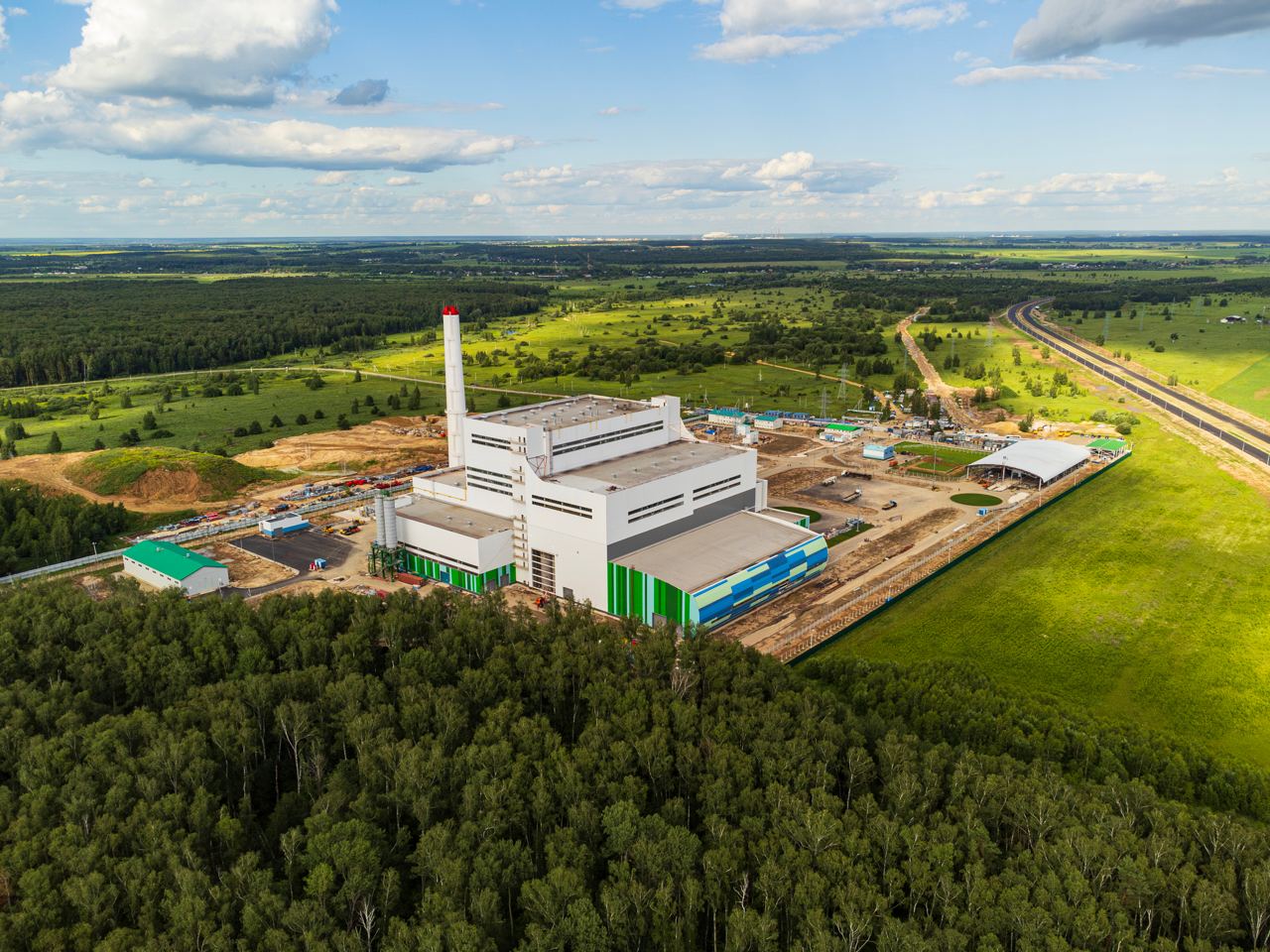
Read about the global experience of energy recovery from waste and how Rostec State Corporation implements this program in Russia
Photo: RT-Invest
The number of waste-to-energy plants is continuously growing worldwide. As recently reported, their number has already reached 2 500. According to analytical data, the annual average growth rate of the waste-to-energy market will be 4.7% by 2032.
A growing number of countries join the Waste-to-Energy program. Five waste-to-energy plants are currently being constructed in Russia with the involvement of Rostec State Corporation: four plants in the Moscow Region and one plant in Tatarstan.
Read about the history of the technology, global experience and status of the Russian program.
Store or burn
Waste-to-energy (WtE) plants are facilities producing energy from household and industrial waste. The concept behind such plants is that waste is not just burnt, but is used for heat and electricity generation to be further supplied to homes and industries. Waste is first sorted to separate recyclable materials. The remaining non-recyclable part is then burnt at high temperatures. This process releases heat used to generate energy, and gases are filtered to minimize harmful environmental impact.
The idea of waste incineration as a waste disposal method arose as early as in the late 19th century. This method was then treated as a single solution to control the increasing amount of garbage disregarding possible environmental consequences.
A significant progress has been made in this area since the beginning of the 21th century. Advances in the waste incineration and treatment technologies coincided with growing environmental issues and pursuance of sustainable energy.
By the mid 2010s, waste management came to be an essential part of energy strategies in many countries. By the late 2010s — early 2020s, waste-to-energy became one of the fastest growing energy technologies against the background of climate change and low-carbon transition.
WtE has spread globally
About 2 500 waste-to-energy plants are already operating throughout the world. This technology is most successfully developed in European and Asian countries. For example, waste-to-energy plants in Sweden and Denmark supply heat and electricity to whole cities by converting waste to a valuable resource. The system in Sweden is running so effectively that the country even imports garbage from other countries now.
Japan is one of the countries where waste-to-energy helped solve the problem of confined space for dump sites. As far as this is an island country and there is not enough land, construction of such plants helps reduce the amounts of garbage, let alone converting it into useful energy.
When it comes to specific numbers, a plant near Istanbul — the largest one in Turkey and one of Europe’s largest plants — can be used as an example. It is has been working since 2021 to supply heat and electricity to about 2 million people. For this, about 3 000 tons of waste are burnt on the plant grates generating 78 MW*h of electricity and 175 MW*h of heat energy. Hitachi Zosen Inova, a Japanese-Swiss company, is the technology and equipment supplier.
Russia without dump sites
RT-Invest, a subsidiary of Rostec State Corporation, is focused on construction of Russia’s first waste-to-energy plants. There will be four plants in the Moscow Region and one plant in Tatarstan.
Hitachi Zosen Inova is the technology partner of plants near Moscow. As at the plants in Turkey, Russian plants will use the traveling grate incineration technology. These plants will prevent burial of 2.8 million tons of waste annually in landfills. Before incineration, waste will be thoroughly sorted and all materials suitable for composting or recycling will be sent to recycling facilities. The first plant of this kind is to be launched this year.
Key equipment for the plant in Kazan will be supplied by China’s Chongqing Sanfeng Covanta Environmental Industry Co., LTD. The capacity of Tatarstan’s facility will be 550 000 tons of waste per year.
Russian waste-to-energy plants are modern high-tech facilities. They play a key role in formation of a closed-loop waste management system. Commissioning of these plants will be an important step towards refusing from waste burial in landfills and implementing Zero Waste principles in Russia.